


Ethereum Treasury Companies: South Korea's $6B Retail Investment Boom Explained

How Korean investors are betting billions on Ethereum treasury companies—BitMine, SharpLink, and the risks behind the ETH accumulation trend
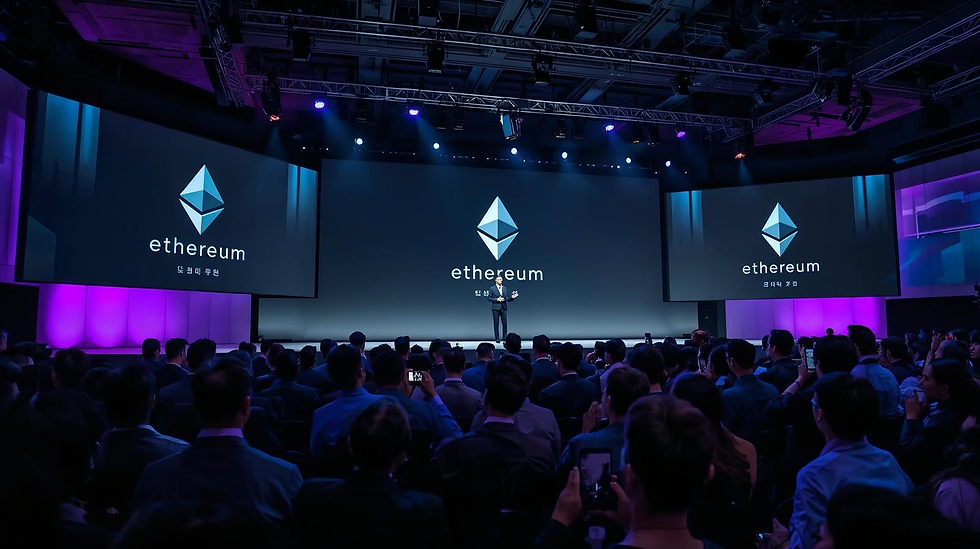
The Setup: When FOMO Drives $6B Into Ethereum Treasury Companies
Korea's love affair with Ethereum is heating up faster than a kimchi stew in a bull market. While Wall Street debates blockchain scalability and institutional adoption, South Korean retail investors have skipped the homework and dived headfirst into what they believe is the next MicroStrategy-style wealth generator.
According to Samson Mow, CEO of Bitcoin technology company JAN3, approximately $6 billion of South Korean retail capital is currently propping up Ethereum treasury companies—firms that accumulate ETH on their balance sheets much like MicroStrategy hoards Bitcoin. His blunt warning? "This won't end well."
This isn't just another crypto bubble story. It's a fascinating collision of influencer marketing, financial engineering, cultural risk appetite, and good old-fashioned FOMO—all wrapped in the veneer of "treasury strategy." The so-called "seohak gaemie" (Korean retail investors who invest abroad) have funneled billions into companies like BitMine and SharpLink, convinced they're getting in early on the next big thing.
But there's a problem: many of these investors don't understand the fundamental differences between Bitcoin's digital gold narrative and Ethereum's complex smart contract ecosystem—or why that distinction matters when your balance sheet becomes a betting pool.

The Numbers: $25 Billion in Corporate ETH Holdings
Let's start with the staggering numbers. Data from Strategic ETH Reserve shows that 67 entities collectively hold approximately 5.49 million ETH—roughly $25 billion worth—representing about 4.5% of Ethereum's total supply. That's a significant chunk of the world's second-largest cryptocurrency sitting on corporate balance sheets.
The two leaders dominating this space:
BitMine Immersion Technologies
World's largest Ethereum treasury
Holds approximately $13 billion in ETH (2.83 million tokens)
Led by Wall Street veteran Tom Lee of Fundstrat
Pursuing the goal of holding 5% of the total ETH supply
SharpLink Gaming
Second-largest corporate ETH holder
Approximately $3.85 billion in holdings
Transformed from a gaming company to an ETH accumulation vehicle
Aggressively raising capital through stock offerings
The Korean Connection
According to Mow's analysis, roughly one-third of South Korea's entire population actively trades digital assets (per Korea Securities Depository data). But here's where it gets interesting: in August alone, Korean retail investors:
Dumped $721 million worth of Tesla stock
Shifted $269 million into BitMine
Abandoned blue-chip American tech stocks to chase crypto treasury plays
They're not just trading crypto—they're fundamentally reallocating capital away from established companies toward what they perceive as the next evolution of corporate crypto strategy.

The Warning Signs: ETH vs. BTC Performance
The playbook seems simple: ETH influencers fly to Seoul, stage high-profile marketing events, and present a vision mirroring MicroStrategy's Bitcoin pivot—balance sheets loaded with a "digital native asset" powering the decentralized future.
But Mow cautions that most local retail investors don't even glance at the ETH/BTC chart. They think they're buying into an immutable treasury juggernaut. This is where the cracks begin to show.
The ETH/BTC Reality Check
The ETH/BTC pair tells a sobering story:
Clear downtrend since mid-2022
Ethereum is struggling to maintain value relative to Bitcoin
Multi-year range with only brief bounces at support levels
Bitcoin is hitting new all-time highs while ETH remains 70% below its peak
For investors focused only on dollar-denominated prices, this relative weakness might be invisible. But for anyone analyzing crypto fundamentals, it's a flashing warning sign.
Andrew Kang's Brutal Assessment
Andrew Kang, co-founder of Mechanism Capital, didn't mince words. He dismissed the ETH treasury bull thesis as "financially illiterate," arguing that:
Ethereum's valuation relies primarily on macro liquidity and speculative belief
Without major structural changes, ETH will continue to underperform and remain range-bound
The narrative is built on hype, not fundamental value accrual
"The valuation that can be derived from financial illiteracy is not infinite," Kang warned, comparing Ethereum's speculative momentum to XRP's historical rallies.

The Influencer Effect: Selling Dreams One Flight at a Time
One of the most striking aspects of this phenomenon is the deliberate marketing strategy. ETH influencers have been flying to South Korea specifically to market to retail investors, promoting these treasury companies as "the next Strategy play."
Think about that: influencers are literally boarding international flights to sell a financial narrative to an audience hungry for the next big thing.
Pattern Recognition: We've Seen This Before
This isn't crypto's first rodeo with influencer-driven speculation:
The 2017 ICO Boom
Celebrities and influencers hawked tokens promising to revolutionize everything
Most went to zero
Retail investors left holding worthless tokens
The NFT Frenzy (2021)
Influencers convinced followers that JPEGs were the future of wealth
Floor prices collapsed
Digital art became digital bagholding
GameFi Schemes (2021-2022)
"Play-to-earn" promised financial freedom
Ponzi mechanics collapsed
"Scholars" realized they were the product, not the customer
Each cycle follows the same pattern: legitimate innovation (smart contracts, digital ownership, blockchain gaming) gets wrapped in a narrative so compelling that it obscures the underlying economics. Influencers amplify the message, FOMO does the rest, and retail piles in right before the music stops.
The Seductive Comparison
The Ethereum treasury narrative is particularly effective because it borrows credibility from MicroStrategy's success. The implicit promise is simple: "We're doing for Ethereum what Michael Saylor did for Bitcoin."
But there's a critical difference: Bitcoin's narrative is simple and stable—digital gold, store of value, inflation hedge. Ethereum's value proposition is exponentially more complex—programmable platform, smart contracts, DeFi protocols, and tokenization experiments. That complexity makes it simultaneously more powerful and more vulnerable to narrative shifts.
When your investment strategy relies more on charisma than code audits, you're betting that the story will hold—and in crypto, stories can change faster than a Seoul subway schedule.
Understanding Treasury Models: Stacking ETH Like Strategy
So what exactly are these Ethereum treasury firms?
The Business Model
The model is straightforward:
Raise capital (stock issuances, convertible debt, operating cash flow)
Convert capital into ETH
Stake it for yield
Hold for long-term appreciation
Watch your treasury (hopefully) grow
Companies like BitMine and SharpLink have essentially transformed themselves from traditional businesses into Ethereum accumulation vehicles.
Tom Lee's Vision
BitMine Chairman Tom Lee has positioned the strategy around converging macro trends:
"The two supercycle investing narratives remain AI and crypto. And both require neutral public blockchains. Naturally, Ethereum remains the premier choice given its high reliability and 100% uptime. These two powerful macro cycles will play out over decades."
Lee believes ETH's current price is "a discount to the future" and that "the power law benefits large holders of ETH"—hence BitMine's pursuit of owning 5% of total supply.

The MicroStrategy Comparison: Why It Matters
Bitcoin (MicroStrategy Model):
Fixed supply cap (21 million coins)
Clear, unchanging monetary policy
Primary use case: store of value
Simple narrative: digital gold
Ethereum (Treasury Model):
Dynamic supply influenced by network upgrades
Value is dependent on network usage and transaction fees
Multiple use cases add complexity
Complex narrative: world computer, DeFi backbone, tokenization layer
Critics argue this distinction is crucial. Bitcoin operates as digital gold—relatively simple to value. Ethereum's value depends on the success of applications built on top of it, making it fundamentally riskier despite its technological sophistication.
As one analyst put it: It's one thing to hodl digital gold. It's another to treat your balance sheet like a staking pool and hope speculative capital keeps flowing into an ecosystem whose fee generation hasn't kept pace with promises.

The Kimchi Premium: Korea's Crypto Fever
To understand how intense Korean crypto demand can get, you need to understand the Kimchi Premium—the price gap for crypto between South Korean exchanges (Upbit and Bithumb) versus global markets.
The Numbers
According to CoinGlass data:
Upbit ranked the 10th largest exchange for Ethereum futures trading
$1.29 billion in weekly trading volume
Remarkable concentration for a single country
Korean futures markets can meaningfully move global ETH valuations
The Kimchi Premium isn't just a curiosity—it's a barometer of local demand pressure and risk appetite. When the premium expands, Korean investors are buying aggressively, willing to pay above-market rates. When it contracts or goes negative, it signals selling pressure or capital flight.
Why Korea? The Perfect Storm
Several factors drive Korea's crypto obsession:
1. Technology Infrastructure
World-leading internet speeds
Near-universal smartphone penetration
Tech-savvy population comfortable with digital assets
2. Cultural Risk Tolerance
Acceptance of speculation and active trading
History of retail participation in volatile markets
Community-driven investment trends
3. Economic Pressures
Stratospheric real estate prices in Seoul
Brutally competitive job market for young people
Traditional wealth-building paths are increasingly difficult
4. Demographic Factors
Younger generations are seeking alternative paths to financial independence
Crypto is both an investment class and a potential shortcut
Narrative resonance around "being early"
Ethereum's narrative power plays perfectly into this dynamic. Unlike Bitcoin's austere "digital gold" positioning, Ethereum promises participation in the future of finance, technology, and digital ownership. It's exciting, complex enough to feel sophisticated, and volatile enough to generate life-changing returns.
The Diversification Question
Marcin Kazmierczak, co-founder of blockchain oracle firm RedStone, offered a more balanced perspective:
"Characterizing Korean retail as primary support for Ethereum significantly understates the network's diverse global capital base, which includes substantial US institutional investment through ETFs, corporate treasuries, and the vast DeFi ecosystem."
That's a diplomatic way of saying: yes, Korean money matters, but it's not the whole story. The real question is what happens if that $6 billion decides it's time to exit.

The Cracks in the Foundation: What Could Go Wrong?
Every bull market looks invincible until it isn't. Several potential fault lines could challenge the Ethereum treasury narrative:
1. Persistent ETH/BTC Underperformance
If Ethereum continues lagging Bitcoin, the "next Strategy play" narrative crumbles. Why would investors pile into a company accumulating an asset that can't keep pace with its primary competitor?
The answer might be "long-term vision," but markets don't always wait for visions to materialize—especially when alternatives are outperforming.
2. Liquidity Risk and Capital Flight
The concentration of $6 billion from Korean retail creates vulnerability. If sentiment flips due to:
Regulatory changes
Broader market corrections
Influencer scandals
Simply profit-taking
That capital could exit far faster than it arrived. Treasury companies holding billions in ETH would face a double squeeze: holdings declining in value as stock prices crash, potentially triggering a doom loop of redemptions and selling pressure.
3. Fundamental Value Accrual Problems
Critics like Kang point out that Ethereum's valuation is driven by macro liquidity and speculative belief, not fundamental fee generation. Despite explosions in:
DeFi activity
NFT minting
Decentralized applications
Ethereum's actual fee revenue hasn't scaled proportionately with market cap. Transaction fees fluctuate wildly based on network congestion, and the shift to proof-of-stake reduced miner selling pressure but didn't fundamentally change value accrual.
4. Technical Analysis Concerns
Ethereum's price remains capped below its all-time high of $4,946, even as Bitcoin surges to new records. That divergence suggests either:
Bull case: Ethereum is deeply undervalued
Bear case: The market has correctly priced in structural challenges
Which interpretation proves correct will determine whether Korean retail looks prescient or catastrophically overleveraged.

The Bull Case: Why Ethereum Believers Aren't Worried
To be fair, Ethereum supporters offer compelling counterarguments:
DeFi Dominance
Tens of billions locked in smart contracts
Facilitating lending, trading, and yield generation
No competitor comes close to the market share
Stablecoin Infrastructure
Over $150 billion in stablecoins exist
The majority run on Ethereum
Critical infrastructure for crypto markets
Real-World Asset Tokenization
Traditional financial assets are moving onto blockchain
Wall Street is experimenting with tokenization
Ethereum is positioned as a settlement layer
Developer Ecosystem
Composability and network effects competitors can't replicate
Largest developer community in crypto
Continuous innovation and upgrades
Institutional Adoption
Spot ETH ETFs attracting billions
Corporate treasuries accumulating
Ethereum Foundation partnerships with traditional finance
These aren't frivolous arguments. Ethereum genuinely powers much of crypto's most interesting innovation. The question is whether that innovation translates into sustainable value for ETH holders, or whether value accrues primarily to application layers while ETH becomes expensive infrastructure.
It's the difference between owning the railroad (which printed money in the 19th century) and owning the land the railroad crosses (which sometimes did but often didn't).

Key Takeaways: Lessons Beyond Crypto
This situation offers insights applicable far beyond cryptocurrency markets:
1. Narrative vs. Fundamentals
The gap between compelling stories and underlying economics can persist longer than rational analysis suggests—but eventually, fundamentals matter. Treasury strategies work when the accumulated asset has clear value drivers, not just momentum.
2. Influencer-Driven Markets
In an era where social media drives investment decisions, the line between education and promotion has blurred. Due diligence increasingly means evaluating not just financial metrics but incentive structures behind information sources.
3. Cross-Border Capital Flows
The concentration of $6 billion from a single demographic represents both opportunity and systemic risk. Understanding where capital originates and what motivates it is crucial for assessing sustainability.
4. Complexity as a Double-Edged Sword
Ethereum's programmability is simultaneously its greatest strength and challenge. Complex value propositions attract sophisticated users but can obscure fundamental weaknesses from retail investors.
5. Cultural Context in Global Markets
South Korea's unique combination of tech-savviness, economic pressure, and risk tolerance creates market dynamics that don't translate elsewhere. What works in Seoul may not work in San Francisco—and vice versa.
6. History Rhymes
We've seen this pattern before with ICOs, NFTs, and GameFi. Each time, legitimate innovation gets wrapped in narrative-driven speculation. Pattern recognition matters when navigating hype cycles.

The Bottom Line: Education Over Emotion
Korea's ETH treasury mania isn't just about speculation—it's a mirror reflecting global investor psychology in an era where traditional wealth-building paths seem broken, technology promises to democratize finance, and charismatic narratives can move billions before fundamentals matter.
The Korean retail investors pouring money into Ethereum treasuries aren't stupid—they're responding rationally to information from influencers, excitement in their communities, and belief that they're getting in early on something transformative.
The problem is that many don't glance at the ETH/BTC chart or understand fundamental differences between Bitcoin's established narrative and Ethereum's complex value proposition—or why that distinction matters when corporate balance sheets become speculative vehicles.
The Verdict: Still Being Written
Will Ethereum treasury companies be the next MicroStrategy, turning early believers into millionaires? Or will they be the next cautionary tale about confusing financial engineering with financial innovation?
The answer probably lies somewhere in between—some firms will navigate the volatility successfully, while others will unwind spectacularly when liquidity dries up or narratives shift.
For investors watching this unfold, the lesson is timeless: education beats emotion, fundamentals beat FOMO, and understanding what you own matters more than understanding what influencers say you should own.
The Ethereum treasury story is still being written, and Korean retail is currently holding the pen. But markets have a way of reclaiming authorship when stories diverge too far from reality.
As RedStone's Kazmierczak noted, Ethereum's strength lies in its "borderless nature," combining Korean retail enthusiasm with global institutional participation, DeFi infrastructure, and diverse capital bases. Whether that diversity provides ballast in a storm or simply spreads contagion more widely is the $6 billion question—and we're all about to find out the answer together.
In crypto, the only certainty is uncertainty. But at least now you understand what you're uncertain about.
What's your take on Ethereum treasury companies? Are they the future of corporate crypto strategy, or a speculative house of cards? Share your thoughts in the comments below.


Comments