


Cadena de bloques de Binance (BNB)

Introduction
TeddyDoge is A one-stop full-featured decentralized exchange. Including a swap, aggregate transactions, liquidity, farm, 15 mainstream chain transactions, 15 mainstream cross-chains, 15 mainstream chain chart system, token and liquidity multi-scheme locking, TeddyWallet and derivatives.
What is Teddy Swap?
TeddySwap is an automated market-making (PMM) decentralized exchange (DEX) currently on the blockchain. In addition to DEX, TeddySwap involves a collection of governance, operations and
reward contracts that help grow the TeddySwap ecosystem and utilization.
Teddyswap’s products are configured in a way that allows the entire platform to maintain decentralized governance of TEDDY token holders, while continuing to innovate on the collective foundations by design. Whereas major structural changes are voted on by the community, the day-to-day operations, rebalancing of pools and ratios, business strategy, and overall development is ultimately decided on by the Teddyswap team.

Staking
TeddyDoge is for experienced and ambitious market makers (both institutions and individuals), who want the highest degree of freedom and customizability possible to execute their own market making strategies. In this use, all liquidity in the liquidity pools belongs to the market makers themselves and they also have full control over all the pool parameters. Market makers can dynamically adjust the asset price by changing these parameters based on their assessment of market sentiment, valuation, and other factors. Moreover, market makers can deposit to and withdraw from these liquidity pools in arbitrary ratios, without affecting the asset
price.
For a more concrete example, a ETH/USDT market maker in this case can choose to market-make near ETH=700USDT in order to provide highly competitive liquidity and earn considerable transaction/swap fees from trading activity.
When the market maker foresees or predicts an increase in ETH price, they can then react accordingly by removing some ETH from their pool to reduce their market risk exposure. This maneuver does not affect the liquidity on the USDT side, however, so trading activity can continue as usual. This use case also applies to issuers of new assets, who can choose to only deposit the tokens they are issuing, without any capital (e.g. ETH, USDT, or other stablecoins). They can set the initial offering price to ensure low price elasticity, so that the token price does not fluctuate too dramatically due to the influx of trading activity.
This design also means that when token issuers need capital for development and operations, they can simply withdraw capital from the liquidity pool without affecting thesell-side liquidity.
The only configuration required for this use case is that:
Deposits/Withdrawals are set so that only market makers (owners/creators of the pools) are allowed to perform such operations.
Single-token liquidity provision/removal is allowed.

What Does Liquidity Mean?
For any investment, one of the most important considerations is the ability to efficiently buy or sell that asset if and when the investor pleases. After all, what is the point of profit if the seller is not able to realize their gains? The liquidity of the asset will largely determine if and how much of a position a prudent investor will take in the investment – and this extends to Bitcoin and other cryptocurrencies.
Liquidity in cryptocurrency means the ease with which a digital currency or token can be converted to another digital asset or cash without impacting the price and vice-versa. Since liquidity is a measure of the outside demand and supply of an asset, a deep market with ample liquidity is an indication of a healthy market. Additionally, the more liquidity available in a cryptocurrency or digital asset, all things being equal, the more stable and less volatile that asset should be.
In other words, a liquid cryptocurrency market exists when someone is prepared to buy when you are looking to see; and if you’re buying, someone is willing to sell. It means you may buy that digital asset in the quantity that you want, take profit from a trading opportunity, or in the worst case, cut your losses should the value of the asset fall below your costs, all without moving the market dramatically.

Liquidity Provider Fee
A small transaction fee is charged for every trade. This fee is called the liquidity provider fee and is distributed to every liquidity provider proportionate to their stake in the capital pool.
More specifically, liquidity provider fees are collected from what buyers receive and distributed to liquidity providers who supply this kind of asset to the capital pool. In other words, liquidity providers are rewarded in the same asset denomination. For example, when traders buy ETH tokens with USDC tokens, liquidity provider fees will be charged in the form of ETH tokens, and these tokens will be distributed to the liquidity providers who deposited ETH tokens into the capital pool. When traders sell ETH tokens for USDC tokens, liquidity provider fees will be charged
in the form of USDC tokens, and these tokens will be distributed to the liquidity providers who deposited USDC tokens into the capital pool.
Maintainer fee
A maintainer fee is also collected from what buyers receive, and is directly transferred to the maintainer. The maintainer may be a development team, a foundation, or a staking decentralized autonomous organization (DAO). Currently, the maintenance fee on Teddy is 0
Withdrawal Fee
A withdrawal can change the PMM price curve and may harm the interests of other liquidity providers. Teddy charges a withdrawal fee from liquidity providers who withdraw their assets and distribute it to all remaining liquidity providers.
Deposit Rewards
Rewards will be distributed to those who make a deposit of base or quote tokens when the capital pool faces a shortage of that type of token.
Base And Quote Tokens
Two easy ways to distinguish base and quote tokens are:,
> In a trading pair, the base is always the
token before the hyphen, and quote is
after it,
> In transactions, the price refers to how
many quote tokens are needed in
exchange for one base token
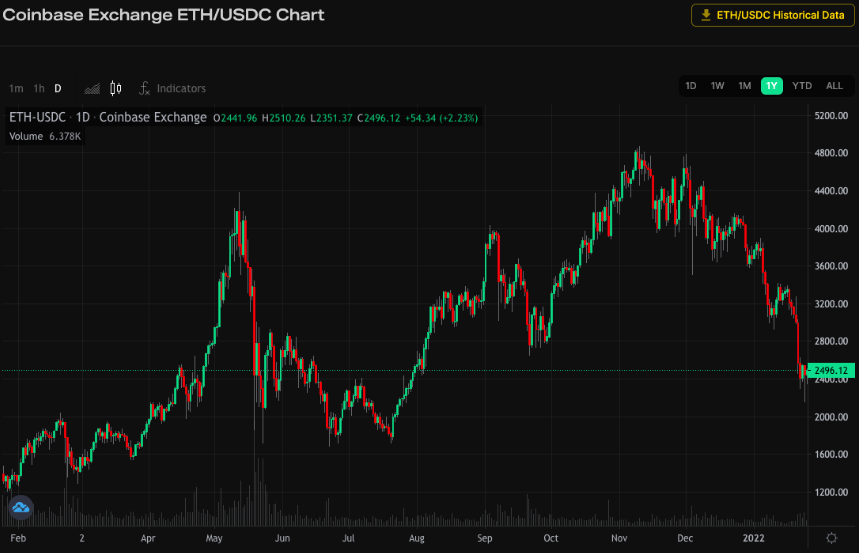
For example, in the ETH-USDC trading pair, ETH is the base token and USDC is the quote token.
What is the Price of TEDDY Tokens?
TEDDY token is currently trading at MEXC for $0.000000003862. It has a fully diluted market of $4,963,800. It also has a 24-hour trading volume of $2,324,159.

How to buy TEDDY Tokens on MEXC
You can buy TEDDY Tokens on MEXC by following the steps:
Log in to your MEXC account and click [Trade]. Click on [Spot].
Search “TEDDY” using the search bar to see the available trading pairs. Take TEDDY/USDT as an example.
Scroll down and go to the [Spot] box. Enter the amount of TEDDY you want to buy. You can choose from opening a Limit order, a Market order, or a Stop-limit order. Take Market order as an example. Click [Buy TEDDY] to confirm your order. You will find the purchased TEDDY in your Spot Wallet.
Tokenomics
15 billion total issuance TeddySwap 9 billion for liquidity of DEX 2 billion private placement, 20 private placement units, lock-up for 30-90 days, lock-up and address announcement. The total private equity fund is 300,000 USDT.
2.8billion held by the team, and the address will be announced.
The 500 million community 1st IDO funds are 100,000 USDT, and the issue price is 0.0002$.
The 200 million community 2nd IDO funds are 100,000 USDT, and the issue price is 0.0005$.
500,000,000 is used as farm staking bonus, and 500,000 is automatically injected into the farm reward every day. 1000 days of injection is completed.

Where to buy TEDDY Token
You can find TEDDY Token at MEXC, pancakeswap, and spookyswap.
A multifunctional swap integrating transaction,exchange,farm,wallet and chart.